After a corporate buyout of a British Columbia vet clinic, a veterinary assistant says there was a “total turnaround” in the work environment, with higher-ups tracking employees with cameras and pressure to rush patients through.
Skip to content

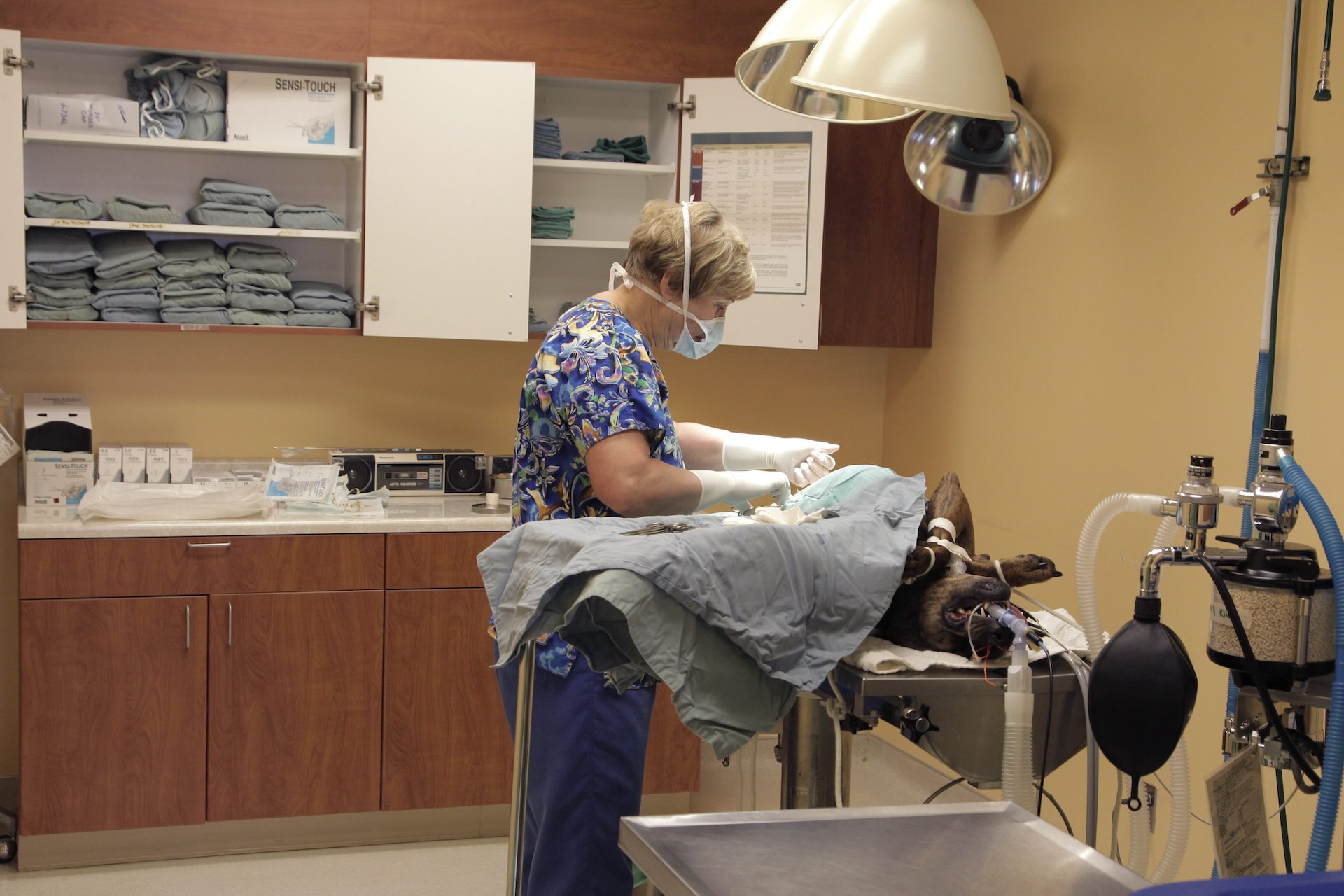 Veterinary science has grown in leaps and bounds—and it also means owners are willing to pay more for better care. Photo: AP Photo/Ted S. Warren

News
The pet-care boom is making your local vet a takeover target
Big corporations and large investors are transforming the vet industry, for better and worse
Large consolidators see an investment opportunity in local vet clinics, and now about 20 percent are owned by six companies. Photo: Corbis via Getty Images/Erik Freeland
After a corporate buyout of a British Columbia vet clinic, a veterinary assistant says there was a “total turnaround” in the work environment, with higher-ups tracking employees with cameras and pressure to rush patients through.
VCA Canada, owned by multinational candy-bar conglomerate Mars, had bought the clinic in B.C. where the veterinary assistant worked in 2022. She asked not to be named to avoid hurting her job prospects, and The Logic is not naming the clinic to avoid identifying her.
Talking Points
- Twenty per cent of Canadian animal practices in 2023 were owned by six corporate consolidators, according to one study
- Corporate takeovers can mean new cash flow into a practice, and a chance to update equipment and training. Some veterinary professionals, however, say the new corporate culture and goals are at odds with the altruism of veterinary practice.
When the clinic brought in cameras to watch her and her co-workers every move, she thought that seemed a step too far—she said there were “cameras everywhere,” Ultimately, she was laid off. “It was devastating. I was escorted off the property. I couldn’t even say goodbye to anybody.”
The veterinary assistant says she is now disillusioned by the veterinary industry—the one she dreamed of being a part of since childhood—and questioning whether she’ll stay in it. VCA Canada did not respond to specific questions, but general manager Cathy Gaviller said in an email statement that the company works with practices they acquire to “ensure we are aligned with shared values.”
The veterinary industry has seen rapid growth in the past five years: its growth rate in the U.S. was between seven and 12 per cent in 2020 and 2021, according to the Ackerman Group, a company who helps sell veterinary businesses to corporations. Today it’s a multibillion-dollar business internationally. This growth has been paralleled by rising costs for pet owners, though it’s difficult to discern exactly how sharp this rise has been.
The veterinary assistant The Logic spoke to is not alone in criticizing takeovers by large investors and corporations. The buyouts are turning veterinary practices into veterinary businesses: as new money flows in, clinics can upgrade, and staff and clients potentially benefit. On the flip side, there’s more focus on efficiency, leaving some feeling alienated. Other veterinary professionals have said the corporations change the culture and hike prices, and that their philosophy is at odds with the altruism of veterinary practice.
Related Articles


While big player National Veterinary Associates (NVA) was founded in the U.S. and then set up a subsidiary here, Canada’s biggest veterinary chains, VetStrategy and VCA Canada, started out as owners buying one or two local practices.
VetStrategy began in 2006 as a husband and wife duo buying a vet hospital in Ontario. Since 2021 it’s been part of U.K.-based IVC Evidensia, the second-largest veterinary group in the world, with almost 2,500 clinics in 20 countries.
VCA Canada, meanwhile, started as a small group of hospitals in Alberta in 1981. Now, it’s owned by behemoth Mars, which operates more than 2,500 clinics worldwide and generates over US$30 billion globally from its pet-care arm that includes Royal Canin and Pedigree.
Initial mergers may have been short-term plays—say, to take advantage of an owner’s retirement—but grow big enough, and a Canadian-owned cluster of clinics might catch the eye of a larger, international veterinary conglomerate. Now if a clinic is looking to sell and it’s a matchup between a big private equity company and a local buyer, the local buyer barely stands a chance.
“With these large conglomerates that buy up multiple practices, the money they’re using to buy is coming from investment funds. It’s not coming from a bank,” says Tim Arthur, president of the Canadian Veterinary Medical Association (CVMA). Arthur previously sold his vet practice to a corporate group, though he could not get permission to name it before the time of publication.
“It costs a heck a lot more to run a clinic than what it did five to six years ago”
The conglomerates see an investment opportunity. Canadian practices generated between $475,000 and $1.2 million in revenues per full-time veterinarian in 2022–2023, according to CVMA estimates. This added up to around $9.3 billion in veterinary practice revenue across the country, mostly from Ontario and Quebec. Canada’s veterinary hospital market is expected to grow further, though modestly, at a compound annual growth rate of 7.3 per cent, according to market research company Grand View Research.
This growth doesn’t come from significantly more pets—the number of Canadian pets has grown minimally since 2019—but from what we’re willing to spend on them. Where in the past a collar, bed, supermarket dog food and a vet visit was enough for Fido, now owners are splashing out on flashier collars, maybe even outfits, and premium food.
Veterinary science too has grown in leaps and bounds. Where before a severely fractured leg may have meant an animal was put down, research advances have made it possible to 3D-print new bones. The strong bond owners have with their pets means they are willing to go the extra mile.
These factors coalesced at a time when corporates were gobbling up clinics like a certain hippo-based board game. NVA tripled in size from 2019 to 2023, and IVC Evidensia’s sales grew by 18.5 per cent to £3.4 billion (roughly $5.9 billion) in 2023. In the first half of the 2024 fiscal year, IVC Evidensia spent £69 million ($124 million) buying 35 new sites, mostly in Europe.
One registered veterinary technician in Nova Scotia, who also asked that their name not be used to avoid hurting their job prospects, told The Logic that VetStrategy has made two price increases in the past year. Clients get grumpier, partly because of the price increases, but also because they’re being shuttled through appointments as veterinarians try to meet patient quotas, they said.
“[It] didn’t feel like we were providing that service to the community anymore … you can’t manage a veterinary clinic like you manage a store.”
Another VetStrategy clinic allegedly underwent five price increases of up to six per cent each in a single year, according to a recent CBC investigation.
VetStrategy would not provide a statement from a named spokesperson. NVA did not respond to The Logic’s requests for comment.
Neither the CVMA nor the Ontario veterinary association contacted by The Logic collect data on what all clinics charge, saying that’s up to the individual clinics.
“It costs a heck a lot more to run a clinic than what it did five to six years ago,” says the CVMA’s Arthur, citing factors like the rising cost of veterinary medication, lab work, supplies and electricity. “Everything has gone up.”
By phoning clinics in Toronto, Vancouver, Calgary, Halifax and Montreal, The Logic found that prices for an annual exam for a dog appeared to range anywhere from $86 before tax in Montreal to $150 in downtown Toronto, with the average hovering around $116. This is slightly more than the $99.90 price in the Nova Scotia fee guide, a document provided by provincial veterinary bodies that lists “fair and reasonable” prices for most veterinary procedures.
There are impacts beyond price. The B.C. veterinary assistant, who formerly worked for the VCA-owned clinic, says it was the “sales pitch” attitude of corporate management that didn’t jive with her. Before, her clinic would do charity work, even if that meant not-so-great financials at the end of year. After the takeover, she says she “didn’t feel like we were providing that service to the community anymore … you can’t manage a veterinary clinic like you manage a store.”
That culture shift is the key complaint from many veterinary professionals. Yet, some changes like meeting performance targets—which one veterinarian said put his ethics at risk—are standard in many other industries.
One of the advantages of a corporation taking over is that they often have more cash to renovate a clinic and buy new equipment. VCA Canada’s Gaviller emphasized this point in her statement, saying the level of care expected today is different from a decade ago, and that the company invests in the latest equipment and training while trying to keep vet care accessible. Practices can pool resources too—for example by setting up a centralized triage system for seeing patients after hours. Ideally, this should result in better care for pets.
Practices owned by large consolidators are not ubiquitous in Canada. According to one study from The Canadian Veterinary Journal, 20 per cent of Canadian veterinary practices in 2023 were owned by six corporate consolidators, though it also estimates they own more than 50 per cent of specialty and emergency hospitals.
In the U.S. and U.K., large veterinary groups have been found in violation of local antitrust laws and forced to divest, but when it comes to the veterinarian you see on the regular, it’s far from a monopoly here, Arthur argues. “Corporate medicine doesn’t control 50 per cent of the practices in Canada, and people are free to move from practice to practice. If they’re not happy, they’re free to go down the street,” he says.
Both the technician and assistant agree that poor work culture is a wider issue. The B.C. veterinary assistant describes a case from a different private practice where, she says, she told colleagues that a catheter had been placed incorrectly in a dog but was ignored. The dog passed away that night, she claims. “I probably had a unicorn clinic when I started,” the assistant says.
The Nova Scotia technician—who’s been in the industry for over a decade and worked in both private and corporate practice—also gave examples of “old school” veterinarians in private practice who sometimes aren’t up-to-date with newer animal handling techniques or can’t afford to update their equipment.
“Based on my experiences, I don’t think we should be assuming private practices are better than corporate ones,” they said. “I tell folks to find a veterinarian that they’re comfortable with.”



Loading...
Thanks for sharing!
You have shared 5 articles this month and reached the maximum amount of shares available.
CloseThis account has reached its share limit.
If you would like to purchase a sharing license please contact The Logic support at [email protected].
CloseGift the full article!
You have gifted 0 article(s) this month and have 5 remaining.
Recipients will be able to read the full text of the article after submitting their email address. They will not have access to other articles or subscriber benefits.
Photo: Corbis via Getty Images/Erik Freeland
Veterinary science has grown in leaps and bounds—and it also means owners are willing to pay more for better care.
Most Popular This Week




In-depth, agenda-setting reporting
Great journalism delivered straight to your inbox.
News
Adam Waterous proposes massive crude exports to Asia by rail through northern B.C.
Briefing
Rivals may be ‘horrified’ to realize how exposed their investments are to AI, Aviva CIO warns
Shopify, Sequoia co-lead US$200M investment in online-selling platform Whop
Amid revenue gains, 1Password bets on tools to protect data from AI agents
Best business newsletter in Canada
Get up to speed in minutes with insights and analysis on the most important stories of the day, every weekday.
Exclusive events
See the bigger picture with reporters and industry experts in subscriber-exclusive events.
Membership in The Logic Council
Membership provides access to our popular Slack channel, participation in subscriber surveys and invitations to exclusive events with our journalists and special guests.







